Choosing an underwater camera starts with deciding where and how you plan to shoot. Snorkeling, scuba diving, swimming, and action video place different demands on camera gear. Depth rating, image quality, controls, housing support, and stabilization matter more than marketing labels.
Quick answer: For most recreational users, an action camera offers the easiest balance of waterproofing, video quality, and portability. Choose a rugged compact when still photography and close-up subjects matter more. Scuba divers should check the complete camera-and-housing depth rating before entering deeper water.
| Underwater Camera type | Best suited for | Typical strength | Main consideration |
|---|---|---|---|
| Action camera | Snorkeling, swimming, travel video | Stabilized video and compact size | Still-image controls can be limited. |
| Rugged and compact | Reef photos, macro, travel | Traditional photography controls | Less flexible than interchangeable lenses |
| 360 camera | Creative action footage | Reframing after recording | Usually needs a dive case for clean stitching |
| Mirrorless with housing | Advanced scuba photography | Image quality and lens choice | Higher cost, size, and complexity |
Why Camera Type Matters Below the Surface
Water changes photography in ways that aren’t obvious on land. Light falls quickly as depth increases, while reds and warm colors disappear first. Movement also becomes harder to control because both the photographer and the subject may be moving. An action camera solves different problems than a traditional compact. Action models prioritize stabilization, wide views, durability, and simple controls. Rugged compacts give photographers more familiar still-image features and closer focusing options. Also worth reading: Top 10 Features to Look for in Earphones Under ₹2000.
For video creators, this choice also affects the footage you can get after the trip. TechnoLoss’s guide to vlogging explains how camera equipment fits into a broader video workflow. Choosing gear around the final content format can prevent unnecessary upgrades later.
Current Waterproof Camera Options Compared
Today’s market includes several approaches rather than one universal design. The examples below show how current models differ in underwater use. Always check manufacturer ratings before each trip.
| Current example | Bare-camera depth rating | With supported dive housing | Strongest use |
|---|---|---|---|
| DJI Osmo Action 6 | 66 ft / 20 m | 197 ft / 60 m | Stabilized action video |
| OM SYSTEM Tough TG-7 | 49 ft / 15 m | Housing options available | Stills and close subjects |
| GoPro HERO13 Black | 33 ft / 10 m | 196 ft / 60 m | Action video and accessories |
| Insta360 X6 | 65.6 ft / 20 m | 196.9 ft / 60 m | 360-degree underwater video |
DJI rates the Osmo Action 6 to 20 meters without its waterproof case. Its supported case extends the rating to 60 meters. DJI also recommends the case for long underwater sessions or higher-pressure environments. OM SYSTEM takes a different approach with the Tough TG-7. The rugged compact is rated to 15 meters and supports conventional photo-oriented controls. It also includes durability features aimed at outdoor use beyond swimming and snorkeling.
GoPro rates the HERO13 Black to 33 feet without additional housing. Its protective housing extends that figure to 196 feet. That combination makes housing choice important for scuba use beyond recreational surface activities. Insta360’s X6 reaches 20 meters without a dive case, according to current support documentation. The supported dive case increases the stated limit to 60 meters. A case also matters because water can affect 360-degree stitching quality.
How to Choose an Underwater Camera for Your Activity
Start with the deepest environment you expect to enter. A 15-foot swimming pool creates different requirements than a 100-foot scuba dive. Never treat a camera’s bare-body rating as permission to exceed the manufacturer’s stated depth. Next, decide whether photos or video matter more. Action models suit moving subjects, swimming, surfing, and point-of-view footage. A rugged compact makes more sense when deliberate still photography is the priority.
Finally, consider how much equipment you want to carry. Housings, lights, trays, spare batteries, and mounts can turn a small system into a larger kit. Travelers should consider the entire packed setup instead of comparing camera bodies alone.
Depth Rating Should Be Your First Specification
Waterproof ratings are maximum operating limits, not suggested working depths. Pressure increases as you descend, so deeper use demands more from seals and housings. Damaged doors, dirty seals, or incorrect installation can reduce protection. Manufacturer instructions commonly require users to inspect battery and port doors before entering water. DJI specifically tells users to confirm the covers and the glass lens cover are secured. Insta360 also recommends checking seals for debris before submerging supported models.
A dedicated housing provides another physical barrier for compatible cameras. It can also extend the rated operating depth substantially. Divers should confirm the rating for the exact housing rather than assuming every accessory reaches the same depth.
Image Quality Depends on More Than Resolution
Resolution numbers attract attention, but underwater conditions quickly expose other limitations. Sensor size, lens brightness, focus behavior, and stabilization can matter more than another resolution increase. Low available light becomes increasingly important as you descend. Wide lenses work well for reefs, swimmers, wrecks, and large marine subjects.
Close-focus ability becomes important for shells, small fish, coral details, and macro subjects. Think about subject distance before choosing between wide action footage and photography-focused controls. Video users should also consider frame rates and stabilization. Smooth footage is useful when currents or swimming movements create constant motion. TechnoLoss readers can explore more device coverage through the site’s Gadgets and Apps section.
Action Camera or Rugged Compact?
For most casual swimmers and snorkelers, an action model is the simpler starting point. It is small, easy to mount, and designed around movement. Modern options also provide strong electronic stabilization for handheld footage. A rugged compact is more suitable when photography is the main goal. The TG-7, for example, combines waterproof construction with photo-oriented shooting features. Its design is closer to a conventional compact than a body-mounted action model.
Verdict: Choose an action camera for video-first vacations, swimming, and active sports. Choose a rugged compact for stills, close subjects, and slower composition. Move to a housed mirrorless system only when its added control solves a specific limitation.
When a 360 Camera Makes Sense
A 360 camera records a much wider field around the device. That lets creators choose viewpoints during editing instead of framing everything while swimming. It can produce unusual third-person perspectives with the correct accessories. Underwater use adds an important complication. Refraction can affect how separate lens views join together below the surface. Insta360 recommends its compatible dive case for better underwater stitching on supported cameras.
This format suits creators who value reframing more than simple operation. Traditional photographers may find the editing workflow unnecessary. Buyers should consider the full video workflow before paying for features they won’t use.
Don’t Forget the Housing, Lights, and Grip
The camera body is only part of a useful underwater setup. A secure grip reduces the chance of dropping equipment and makes framing easier. Floating handles can add protection during snorkeling or surface activities. A housing becomes important when your planned depth exceeds the camera’s native rating. It can also provide extra physical protection during repeated water use. Check button access carefully because controls become harder to operate while wearing gloves.
Artificial lighting becomes more useful as natural color disappears with depth. A video light can restore color and detail at useful working distances. Serious still photographers may eventually prefer strobes, arms, and a tray system.
Prepare the Camera Before Entering the Water
A few minutes of preparation can prevent an expensive failure. Inspect doors, seals, lens covers, and housing surfaces before every session. Sand, hair, or other debris near a seal can compromise the system.
Use these checks before entering:
- Confirm every battery and port door is fully closed.
- Inspect housing seals and sealing surfaces for debris.
- Check the lens or protective cover for damage.
- Install a charged battery and enough storage.
- Test recording controls before entering the water.
- Attach a secure wrist strap or floating grip when appropriate.
After saltwater use, follow the manufacturer’s cleaning instructions. DJI says its supported action cameras should be rinsed with clean water and fully air-dried. Insta360 provides similar fresh-water cleaning guidance for its waterproof models.
Common Buying Mistakes
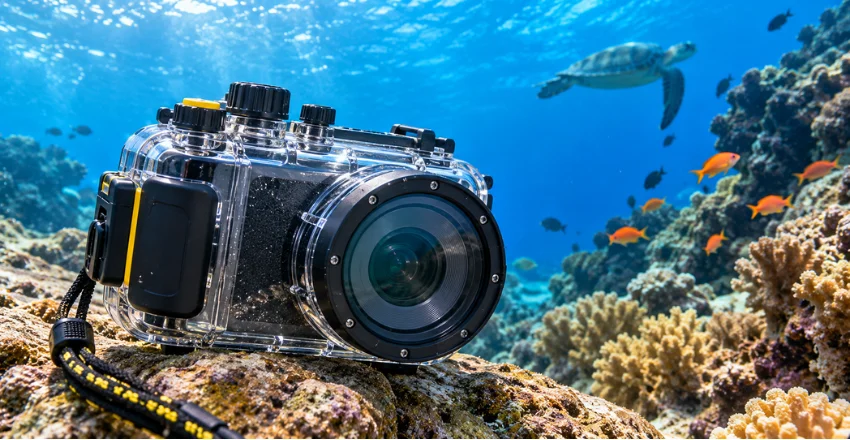
The biggest mistake is buying from resolution alone. A high-resolution specification cannot compensate for poor handling, insufficient depth protection, or the wrong lens perspective. Match the system to the environment before comparing headline specifications. Another mistake is assuming “waterproof” means suitable for scuba diving. Native depth limits vary widely between products. A camera safe in a swimming pool may still require a housing at recreational diving depths. More from us: 8TB SSD.
Buyers also underestimate accessories. Housings, memory cards, lights, mounts, spare batteries, and grips can significantly increase the total cost. TechnoLoss’s broader Technology section is useful when comparing related devices and accessories.
What Should US Buyers Prioritize?
US buyers should start with intended activity, depth, and service availability. A widely supported system can make replacement batteries, housings, mounts, and other accessories easier to find. Retail price alone doesn’t show the total cost of building a complete kit. Travelers should also consider size and charging requirements. A compact kit is easier to manage during flights, road trips, and beach days. Extra equipment becomes worthwhile only when it improves the shots you intend to capture.
For scuba, buy the complete rated system, not the body alone. Confirm housing compatibility before purchasing the camera. Then leave room in the budget for lighting if color quality at depth matters.
Choose the System Around the Water, Not the Spec Sheet
Start with three questions: how deep will you go, what will you shoot, and how much equipment will you carry? Those answers quickly narrow the field between action, compact, 360, and housed interchangeable-lens systems. They also prevent you from paying for features that don’t solve your real shooting needs.
For most recreational video users, a modern action model is the practical starting point. Still, photographers should consider a rugged compact before moving to a larger housed system. Whatever you choose, treat the manufacturer’s depth rating and seal instructions as operating limits, not suggestions.
Frequently Asked Questions
What is the best underwater camera for beginners?
An action model is usually the easiest starting point for beginners who mainly shoot video. Controls are simple, bodies are compact, and stabilization helps during movement. Photography-focused beginners may prefer a rugged compact with more traditional controls.
Do I need a waterproof housing for snorkeling?
Not always, because several current models have native waterproof ratings suitable for shallow recreational use. You must remain within the manufacturer’s stated depth and operating conditions. A housing adds protection and may be worthwhile for extended or rough-water sessions.
How deep can waterproof cameras go?
Depth limits vary significantly by model and accessory configuration. Current bare-camera ratings range from shallow-water limits to roughly 20 meters on several action models. Compatible dive housings can extend some systems to around 60 meters.
Are action cameras good for underwater photos?
They can produce useful wide-angle photos, especially during travel and water sports. Their design tends to favor action video and wide perspectives. A rugged compact can offer a more photography-focused experience for still images and close subjects.
Should I use a red filter underwater?
A filter can help in certain water conditions and depth ranges, but it isn’t a universal fix. Lighting, water color, depth, and camera settings affect the result. Artificial lights are often more useful when subjects are close and natural color has faded.