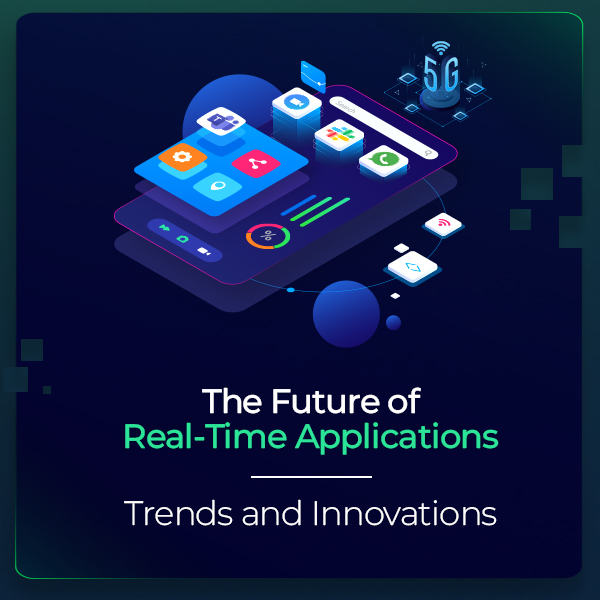
In today’s digital-first landscape, real-time applications have become essential for business agility and operational efficiency. Whether it’s real-time data processing or real-time communication, enterprises are rapidly adopting technologies that enable instantaneous data exchange and immediate decision-making. The global rollout of 5G networks and advancements in edge computing technologies are accelerating this transformation, expanding the potential and capabilities of real-time applications across various sectors.
Cutting-edge innovations such as the Internet of Things (IoT), Artificial Intelligence (AI), and machine learning are no longer mere buzzwords—they are pivotal in driving real-time streaming and ensuring seamless connectivity. From ready-to-use real-time API solutions to bespoke software development, organizations must leverage these advancements to stay competitive in a highly dynamic market. This article explores emerging trends and innovations shaping real-time applications, their multifaceted benefits, diverse use cases, and what the future holds. Let’s dive deeper to uncover these insights.
What Are Real-Time Applications?
Real-time applications process data with minimal latency, enabling user interactions that feel instantaneous. Unlike conventional batch processing where data is handled periodically, real-time processing delivers immediate outputs. For example, in real-time communication, messages and data streams are transmitted nearly instantaneously, providing seamless user experiences without noticeable delay.
Common Use Cases:
Real-time technology powers a wide range of platforms and industries. Popular messaging applications like WhatsApp and Slack utilize real-time APIs for instant messaging, while platforms such as Zoom and Microsoft Teams rely on real-time data streaming to facilitate smooth video and audio conferencing.
Massively multiplayer online games like Fortnite and Call of Duty depend on real-time applications to synchronize game environments globally, ensuring seamless gameplay. Financial markets leverage real-time execution for stock trades to minimize risk. Real-time streaming services such as Netflix and YouTube deliver continuous, buffer-free content, and IoT devices facilitate immediate monitoring and control within smart homes.
- Instant Messaging: Platforms like WhatsApp and Slack leverage real-time apps to deliver messages instantly, enhancing communication efficiency.
- Video Conferencing: Solutions like Zoom and Microsoft Teams transmit real-time audio and video data for fluid, lag-free meetings.
- IoT Applications: Smart home devices and wearables utilize real-time functionality for immediate control and monitoring, improving convenience and safety.
Core Characteristics
Real-time applications combine multiple technological features that allow them to handle vast data volumes and respond instantly to environmental changes, ensuring robust performance and reliability in today’s interconnected world.
- Low Latency: Minimizes delay between data input and output for prompt responses.
- Fast Data Transfer: Critical in applications such as gaming, conferencing, and financial trading for smooth interactions.
- Continuous Data Streams: Enables uninterrupted data flow essential for live broadcasts and IoT sensor networks.
- High Reliability: Maintains consistent data flow despite network fluctuations or high demand.
- Scalability: Supports increasing user counts and data traffic on a global scale.
- Support for 5G and Edge Computing: Reduces latency by processing data near its source, enhancing performance.
- AI and Machine Learning: Integrates data-driven insights to improve user experiences and operational effectiveness.
As industries continue evolving, the future of real-time applications hinges on the integration of these technologies, enabling enterprises to operate faster, smarter, and more efficiently than ever before.
Key Trends Shaping the Future of Real-Time Applications
The advancement of real-time applications is propelled by breakthrough technologies that redefine business operations, enhance processing capabilities, and unlock innovative opportunities across sectors. Key trends driving the future development of real-time applications include:
Trend 1: Edge Computing
Edge computing revolutionizes real-time apps by processing data near its source, such as IoT devices, which drastically reduces latency and supports instant responses. In healthcare and manufacturing industries, this enables real-time monitoring in smart factories and remote patient care through rapid analysis.
Trend 2: 5G Networks
The widespread deployment of 5G networks is poised to redefine real-time communication with ultra-fast speeds and ultra-low latency. Applications in real-time traffic control, autonomous vehicles, and smart city infrastructure will benefit from more reliable and stable data connections, pushing real-time capabilities forward.
Trend 3: AI and Machine Learning
AI and ML integration in real-time applications unlocks predictive analytics and automation, allowing businesses to process massive data streams instantly. This results in personalized recommendations, dynamic content delivery, and enhanced customer engagement through intelligent chatbots and virtual assistants.
Trend 4: Real-Time Data Analytics
Industries demanding swift decision-making increasingly rely on real-time data analytics. For instance, finance uses it to detect fraud instantly, while e-commerce employs it for tailored shopping experiences, empowering businesses to act on insights without delay and maintain a competitive edge.
Trend 5: Blockchain for Real-Time Applications
Blockchain technology is becoming invaluable for real-time applications in fintech and supply chain management by ensuring secure, transparent, and immutable data exchanges. Decentralized ledgers facilitate trustworthy peer-to-peer communications, enhancing security and traceability in real-time transactions.
Trend 6: WebSockets and Real-Time Communication Protocols
WebSockets have emerged as the preferred protocol for continuous, bidirectional, low-latency communication needed by real-time applications. Offering more efficient, persistent connections compared to HTTP/2 or gRPC, WebSockets are instrumental for applications such as real-time gaming, stock trading platforms, and collaborative tools.
Innovations in Real-Time Application Development
The escalating demand for rapid, responsive solutions has led developers to leverage advanced technologies to enhance real-time applications. Breakthroughs such as serverless architectures and sophisticated real-time API integrations are revolutionizing application development by offering improved flexibility, scalability, and efficiency. Key innovations include:
Serverless Architectures
Serverless architectures empower developers to design and deploy real-time applications without managing traditional infrastructure. This approach automatically allocates and scales resources as needed, eliminating manual server maintenance and allowing developers to prioritize creating seamless user experiences.
- Benefits: Serverless solutions are cost-effective by charging per actual usage, offer effortless scalability for traffic surges, and accelerate development cycles by abstracting infrastructure concerns.
Real-Time API Integrations
Recent advancements in real-time API technologies have transformed inter-application communication, enabling instantaneous data processing and exchange. APIs such as WebSockets and gRPC support bidirectional data flows, critical for applications requiring immediate feedback and interaction.
- Examples: WebSockets and gRPC enable faster, more efficient communications, powering platforms for real-time messaging, financial transactions, and collaborative workflows.
Real-Time Collaboration Tools
Progress in real-time collaboration tools has transformed remote teamwork, allowing multiple users to engage simultaneously with real-time updates. Applications such as Google Docs, Slack, and Zoom lead this innovation, streamlining document editing, communication, and virtual meetings.
- Examples: Collaborative tools enhance productivity by enabling instant communication and real-time adjustments across distributed teams.
Utilizing these cutting-edge innovations, businesses can develop smarter, more responsive real-time applications that align with the demands of the modern digital environment.
Emerging Use Cases of Real-Time Applications
Real-time applications extend beyond basic communication and collaboration tools, influencing diverse industries such as gaming, healthcare, and e-commerce. Organizations are harnessing real-time processing to enhance user experiences and optimize operational efficiency through innovative use cases:
Gaming and Entertainment
In gaming, real-time applications facilitate immersive, interactive experiences by ensuring synchronization across global players. Platforms like Twitch leverage real-time streaming to broadcast live gaming events, while streaming services such as Netflix and YouTube utilize real-time API integrations for smooth, buffer-free on-demand content delivery.
Financial Services
Financial markets rely heavily on real-time applications for stock trading and market analysis. The ability to execute trades within milliseconds is crucial in volatile environments. Additionally, real-time APIs power instant payment processing, enhancing security by reducing fraud risks and improving customer satisfaction.
Healthcare
In healthcare, real-time applications enable remote patient monitoring through IoT-connected wearables that continuously track vital signs, allowing healthcare providers to deliver timely interventions and virtual consultations via telemedicine platforms. Moreover, real-time data analysis accelerates medical research, improving clinical outcomes.
E-commerce
E-commerce businesses leverage real-time data analytics to deliver personalized shopping experiences, including dynamic pricing and tailored product recommendations. Real-time inventory management offers instant stock updates to meet customer demand efficiently, boosting satisfaction and streamlining supply chains.
The Future of Real-Time Applications
As technology rapidly evolves, real-time applications will become even more transformative through emerging breakthroughs such as quantum computing, autonomous systems, and hyper-personalization, revolutionizing how businesses operate and engage with customers.
Quantum Computing: The Next Frontier
Quantum computing promises to exponentially accelerate real-time processing. Leveraging qubits, quantum computers can tackle complex calculations far beyond classical capabilities. This advancement will empower real-time applications to manage enormous datasets and solve intricate problems instantly, particularly benefiting fields like finance, cryptography, and scientific research by facilitating highly precise real-time decisions.
Autonomous Systems: Smarter and Faster
Future autonomous systems, including drones and self-driving vehicles, rely on instantaneous data processing to ensure operational safety and efficiency. Advances in AI, 5G connectivity, and edge computing will empower these systems to perform complex tasks autonomously, from package delivery to industrial monitoring, making them increasingly intelligent and reliable.
Hyper-Personalization: Real-Time Customization at Scale
Hyper-personalization, driven by AI and machine learning, is poised to become a defining trend in real-time applications. Businesses can now tailor content, recommendations, and experiences dynamically at the individual level, enhancing user engagement. This is already transforming sectors like e-commerce through dynamic pricing and customized suggestions and is expected to expand across industries, offering unprecedented relevance and value.
Conclusion
The trajectory of real-time applications is being shaped by transformative technologies such as edge computing, 5G, and AI-driven real-time analytics. These innovations are revolutionizing industries by enabling faster data processing, seamless communication, and instant decision-making. With continuous advancements in IoT, machine learning, and emerging fields like quantum computing, real-time applications will become increasingly critical for businesses aiming to maintain a competitive edge. In the fast-evolving digital age, adopting real-time technologies and leveraging custom software development is imperative for delivering rapid responses, intelligent insights, and exceptional user experiences.
Additionally, if you are interested in learning more about the implications of the android applications, we invite you to explore our comprehensive Technology category for further insights and resources.
Real-time applications are also playing a vital role in the burgeoning field of smart cities. By integrating real-time data from sensors and connected devices, urban planners can optimize traffic flow, reduce energy consumption, and enhance public safety. This real-time intelligence allows cities to become more adaptive and responsive to residents’ needs. Furthermore, industries such as agriculture are leveraging real-time monitoring systems to improve crop management and resource utilization, boosting sustainability and productivity. As real-time technologies evolve, their expanding application across diverse sectors will create smarter environments and drive digital transformation globally.