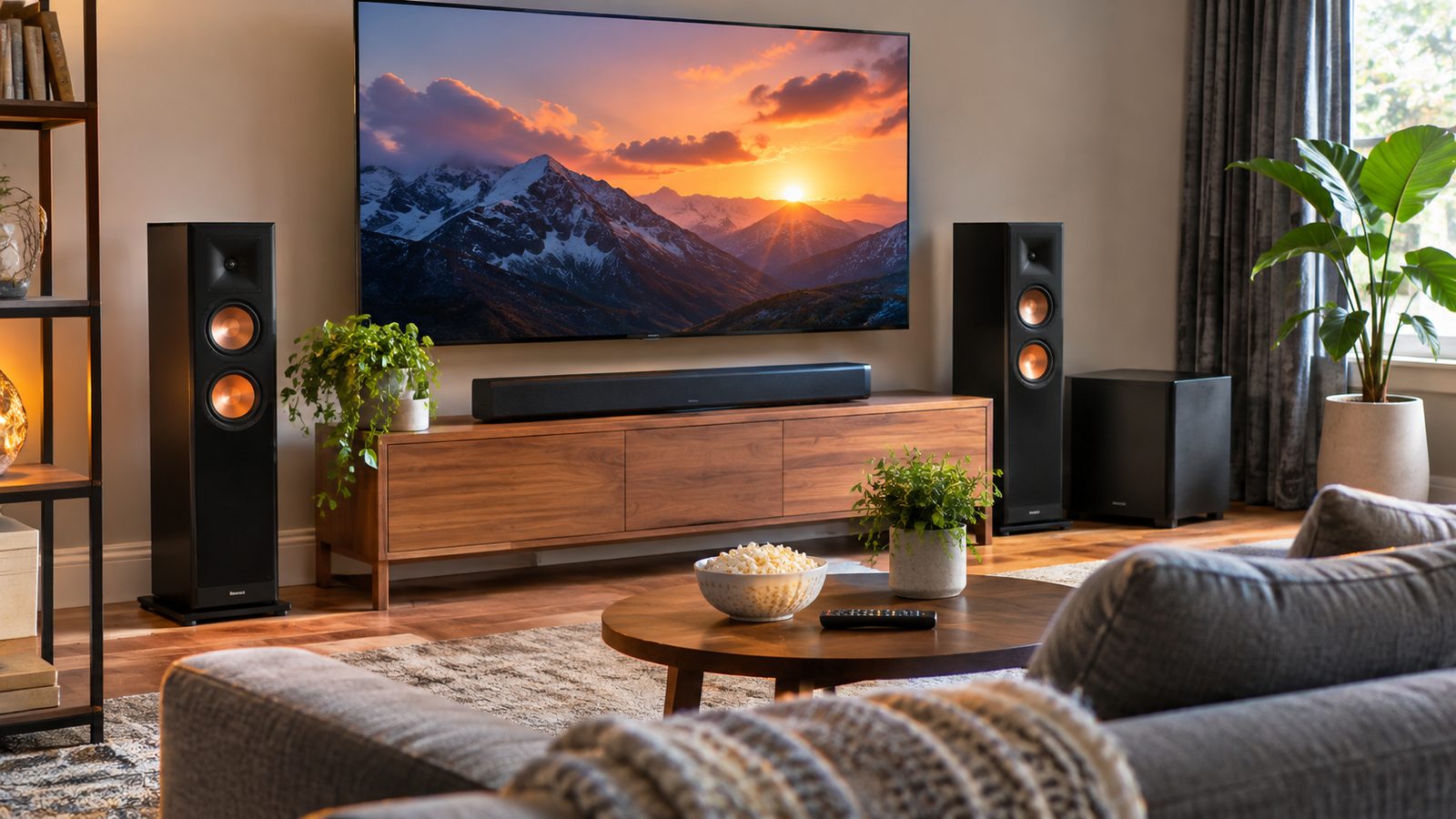
Modern televisions can deliver outstanding pictures, yet their built-in audio often feels less impressive. TV speakers offer an easy way to improve dialogue, bass, music, and movie effects. The right setup depends on your room, connection options, listening habits, and available space. Quick answer: A soundbar suits most households because it is compact, simple, and easy to control. Powered stereo pairs provide wider separation and stronger music performance. A surround system makes more sense when movies, gaming, and immersive effects matter most.
| Setup type | Best for | Main advantage | Main drawback |
|---|---|---|---|
| Built-in television audio | Casual viewing | No extra equipment | Limited bass and soundstage |
| Soundbar | Most living rooms | Simple setup and compact design | Less stereo separation |
| Powered stereo pair | Music and television | Wider, natural stereo sound | Requires space beside the screen |
| 2.1 system | Movies and music | Stronger bass from a subwoofer | More equipment and placement |
| Surround system | Home theater and gaming | Immersive multichannel sound | Higher cost and setup effort |
| Bluetooth speaker | Temporary or portable use | Wireless convenience | Possible audio delay |
Why Television Audio Often Needs an Upgrade
Thin television cabinets leave limited physical space for larger audio drivers. Small drivers usually produce less bass and have fewer placement options. Some models compensate with processing, but cabinet size still affects their performance. Dialogue can become especially difficult during movies with wide dynamic ranges. Music and effects may overpower quieter speech at normal listening levels. External audio equipment gives manufacturers more room for dedicated drivers and better speaker positioning. Consumer Reports notes that many televisions still trail their picture quality in audio performance. Soundbars remain popular because they improve sound without requiring a separate receiver. Some models also include dedicated center channels that can improve dialogue clarity.
Which Type of TV Speakers Should You Choose?
Your best option depends more on your priorities than a single specification. Start by deciding whether you value simplicity, stereo width, bass, or immersive effects most. Then check whether your television supports the connections your preferred system needs.
Soundbars: Best for Simple Everyday Upgrades
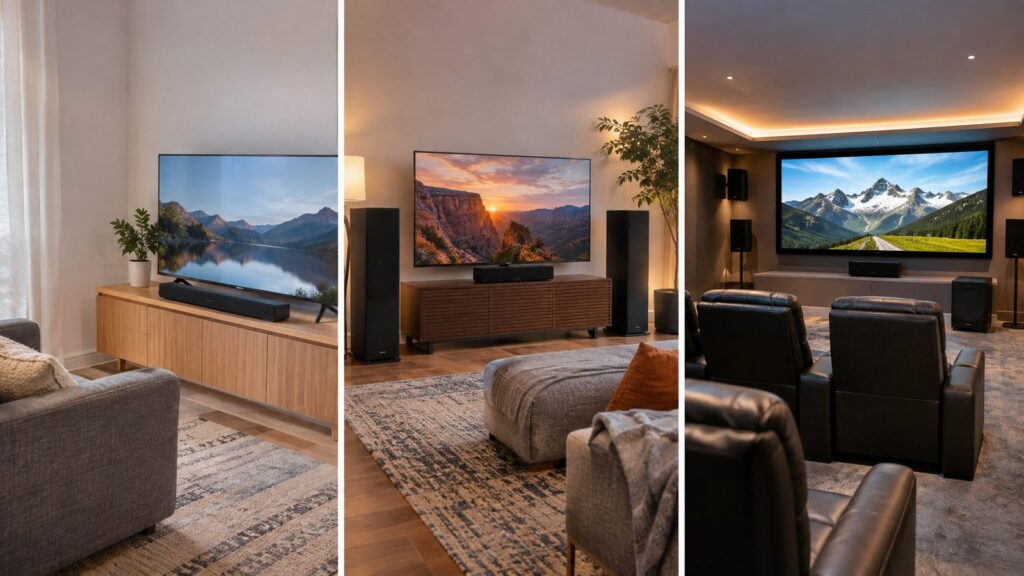
A soundbar is usually the easiest upgrade for a typical American living room. It sits below the screen and keeps wiring relatively simple. Many current models connect through HDMI ARC or eARC. Three-channel bars can include a dedicated center channel for dialogue. More advanced systems may add subwoofers, rear channels, or upward-firing drivers. Those additions can create a larger sound field without requiring a traditional receiver. Soundbars also suit rooms where furniture limits speaker placement. Their compact shape works well with wall-mounted screens and media consoles. Consumer Reports recommends checking bar dimensions against your screen and available shelf space. Pros
- Compact design
- Easy installation
- Strong dialogue-focused options
- HDMI ARC support is common
- Optional subwoofers and rear channels
Cons
- Stereo separation can be narrower
- Premium models become expensive
- Virtual surround varies by room
- Expansion options depend on the system
Powered Stereo Pairs: Best for Music and Wider Sound
Powered stereo pairs contain amplification inside the system, so they do not need a separate receiver. One enclosure sits on each side of your screen. That physical separation creates a wider stereo image than one compact bar. This approach works especially well when music matters alongside movies and television. Voices mixed equally between left and right channels can appear centered near the screen. Instruments and effects also gain clearer placement across the front of the room. Several current powered systems include HDMI ARC, optical inputs, and Bluetooth. Crutchfield highlights HDMI ARC as a useful television connection on modern active speaker systems. Best Buy also notes that compatible ARC systems can support television-remote volume control through HDMI-CEC. Pros
- Genuine left and right separation
- Strong performance for music
- No separate amplifier required
- Flexible input choices on many models
- Subwoofer outputs are available on some systems
Cons
- Requires space beside the display
- More visible wiring is possible
- Some pairs lack HDMI ARC
- Stereo systems do not provide true rear surround
2.1 Systems: Best When Bass Matters
A 2.1 system combines left and right channels with a dedicated subwoofer. The subwoofer handles low frequencies that compact enclosures struggle to reproduce. Action movies, games, and music can therefore sound fuller. Placement becomes more important once a separate subwoofer enters the room. Corners can increase bass, but they may also make it sound uneven. Moving the unit several inches can change the result noticeably. A 2.1 setup can be a strong middle ground for many households. It provides more physical stereo separation than one bar. It also avoids the rear wiring and extra channels of a full theater system.
Surround Sound: Best for Movies and Immersive Gaming
A surround setup places audio channels around the listening position instead of keeping everything near the screen. Traditional configurations may include front, center, surround, and subwoofer channels. Atmos-capable systems can also add height information. This option works best when the room allows thoughtful placement. Rear channels need suitable positions around or behind the seating area. Cables, power outlets, stands, and furniture can affect the final layout. Choose surround audio when immersion matters more than minimal equipment. It makes the strongest case for movie enthusiasts and cinematic games. Casual television viewing rarely needs that level of complexity.
HDMI ARC vs. eARC, Optical, and Bluetooth
Connection type can affect convenience as much as audio quality. Check your television outputs before buying anything. A feature-rich system is less useful when your display cannot connect to it properly.
| Connection | Main benefit | Best use | Limitation |
|---|---|---|---|
| HDMI ARC | Audio and control through HDMI | Soundbars and powered systems | Requires compatible ARC ports |
| HDMI eARC | Higher audio bandwidth | Advanced home theater | Both devices need compatible support |
| Optical | Reliable digital audio | Older televisions and audio systems | Limited format and control support |
| 3.5mm/RCA | Simple analog connection | Older equipment | Less common on new televisions |
| Bluetooth | No audio cable | Casual wireless listening | Latency can affect lip synchronization |
HDMI ARC is usually the most convenient starting point for modern systems. Compatible devices can carry audio and support volume control through one connection. The television and audio product must both support the required HDMI features. Optical remains useful when ARC is unavailable. It carries digital audio and works with many older products. You may need a separate remote because volume control works differently across devices. Bluetooth looks attractive because it removes the audio cable. However, wireless transmission can introduce noticeable delay between sound and picture. Wired digital connections are usually safer for movies, gaming, and dialogue-heavy programs. If your setup also includes a console, connection planning becomes more important. TechnoLoss has additional guidance covering using a laptop screen for a PS4. Checking the entire signal path can prevent unnecessary adapters later.
How to Match Your Audio Setup to the Room
A bedroom usually needs less output than an open living room. Listening distance also changes how large the system needs to feel. Bigger equipment does not automatically produce better results in every space. Small rooms often work well with a compact bar or powered stereo pair. Medium rooms can benefit from stronger stereo systems or a separate subwoofer. Large rooms create a stronger case for wider placement and additional channels. Placement matters even before you upgrade the equipment. Avoid blocking front-facing drivers with decorations, cabinet edges, or other objects. A television stand should also leave enough room for cables and the chosen audio system. If display positioning is part of your setup project, TechnoLoss covers monitor and display stand considerations. The same planning principle helps around televisions. Leave enough clearance for ventilation, connectors, and front-facing audio equipment.
Features Worth Checking Before You Buy
Do not choose equipment by wattage alone. Output figures do not fully describe dialogue clarity, tonal balance, distortion, or room performance. Connection support and channel layout often matter more during everyday use. Look for these features before making a decision.
- HDMI ARC or eARC compatibility
- A dedicated center channel for dialogue
- Optical input for older displays
- Subwoofer output or included subwoofer
- Adjustable dialogue or voice modes
- Night mode for lower-volume viewing
- Bluetooth or Wi-Fi for music
- Rear-channel expansion when desired
- TV-remote control through HDMI-CEC
- Appropriate physical dimensions for your furniture
Dolby Atmos can be worthwhile, but the label alone does not guarantee convincing height effects. Speaker layout, processing, room shape, and source material affect the final experience. Physical rear or height channels usually provide clearer positional cues than processing alone.
What Setup Makes the Most Sense for Most People?
For most households, start with a good soundbar that supports HDMI ARC or eARC. It solves the common problems without requiring significant room changes. A model with a center channel deserves consideration when dialogue clarity is your main complaint. Choose powered stereo instead when music performance and stereo width matter more. This approach can create a spacious front soundstage while keeping the electronics simple. Make sure your chosen pair accepts your television’s available audio output. Move toward surround sound when you have enough space and watch cinematic content frequently. The added speakers can improve positional effects and immersion. They also bring more wiring, placement decisions, and equipment into the room.
Common Buying Mistakes to Avoid
Buying before checking ports is one of the easiest mistakes to make. Not every television supports every output format or control feature. Review both devices before assuming HDMI, optical, or Bluetooth will work as expected. Another mistake is paying for channels you cannot place properly. Rear units squeezed beside the screen will not behave like properly positioned surrounds. Match the system to the room you actually have. Do not ignore everyday usability either. Remote control behavior, startup time, volume adjustment, and input switching affect every viewing session. Convenient equipment often gets used more consistently than complicated equipment. Clear audio matters across other forms of digital media too. TechnoLoss discusses its importance in the site’s video blogging equipment guide. Better sound can improve comprehension even when the picture already looks excellent.
Final Verdict
A soundbar is the safest choice for most homes because setup is simple and space requirements remain modest. Powered stereo pairs are better for listeners who also care strongly about music. Surround systems become worthwhile when immersion outweighs convenience. Start with your room and television connections before comparing advanced features. Decide which audio problem you want to solve first. That approach will narrow your options faster than comparing specification sheets alone. The right system should make dialogue easier to understand and entertainment more enjoyable. It should also fit naturally into your existing room. You do not need the largest system to make a meaningful improvement.
Frequently Asked Questions
Are TV speakers better than a soundbar?
Built-in television audio can be sufficient for news, casual viewing, and smaller rooms. A soundbar usually has more enclosure space for larger drivers and additional channels. That design can improve dialogue, bass, and the apparent width of the sound.
Can I connect regular stereo speakers directly to a television?
Passive stereo models normally require an amplifier or receiver between the television and the pair. Powered models include their own amplification and may connect directly. Check for HDMI ARC, optical, analog, or other compatible inputs before buying.
Is HDMI ARC better than optical for television audio?
HDMI ARC usually offers more convenient control because compatible devices can share volume and power commands. Optical remains a reliable digital option for equipment without ARC. The best choice depends on the formats and control features your devices support.
Are Bluetooth audio systems good for watching television?
Bluetooth can work well for casual listening when both devices support audio transmission. Latency may cause voices to arrive slightly after the picture. A wired HDMI or optical connection usually provides more predictable synchronization.
Do I need a subwoofer for television sound?
You do not need a subwoofer for dialogue or everyday programs. It becomes more useful for movies, games, and music containing substantial low-frequency effects. Your room size and preferred listening volume should guide the decision.
What is the best speaker setup for a small room?
A compact soundbar or small powered stereo pair usually fits a small room well. Both choices avoid the placement demands of a multichannel theater. Pick the option that matches your available connections and furniture layout. —